International Conference on Preventing and Managing Marine Debris in European Seas
International Conference on Preventing and Managing Marine Debris in European Seas
International Conference on Preventing and Managing Marine Debris in European Seas,
10-12 April 2013, Berlin, Germany
To address the serious problem of marine litter in European seas and to ensure its proper management, an international conference, The International Conference on Prevention and Management of Marine Litter in European Seas, was held in Berlin, Germany, from April 10-12, 2013.
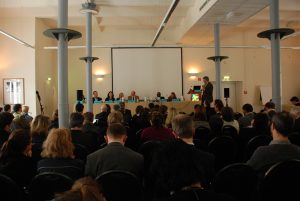
The conference was attended by participants from many countries around the world.
Organized by the German Federal Environment Agency (UBA) on behalf of the Federal Ministry of the Environment and the European Commission's Directorate-General for Environment, the conference was attended by approximately 210 people from countries such as Turkey, Germany, the USA, Brazil, the Netherlands, Denmark, Israel, Egypt, the UK, Italy, Portugal, France, Spain, Slovenia, Bulgaria, Greece, Romania, Norway, Canada, Poland, Belgium, Croatia, Estonia, Finland, Sweden, Switzerland, Mexico, Argentina, and Ireland. The participants included representatives from local governments, plastics manufacturers, recycling industry representatives, packaging industry representatives, retailers, shipbuilders, ferry and cruise ship officials, fishermen, port authorities, consumer organizations, environmental NGOs, academics, research institutes, and private sector associations.
The conference addressed: The discussions covered topics such as the regional and global dimensions of the marine litter problem and microplastic pollution, the European Union's regional and national targets, measures to combat marine litter, best practices for preventing and managing marine litter, new initiatives to prevent litter production, and action plans to be followed for four regions (Black Sea, Mediterranean Sea, Baltic Sea, Northeast Atlantic).
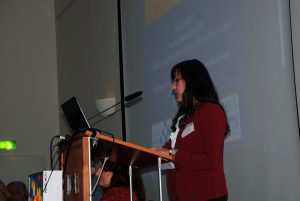
At the conference, TÜDAV presented Beşiktaş Municipality's 'Sea Surface Cleaning' project.
The Turkish Marine Research Foundation (TÜDAV) participated in the conference from Türkiye with a presentation titled "Beşiktaş Municipality's Sea Surface Cleaning Project." This project is among the best practices selected to reduce marine litter in European seas within the scope of the MARLISCO Project, in which TÜDAV is a partner.
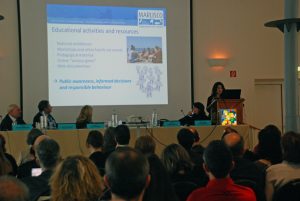
The Marlisco Project was also presented at the conference.
At the conference, participants highlighted three fundamental principles: the precautionary principle, the polluter pays principle, and the prevention of source contamination, emphasizing that these principles should guide the prevention and management of marine litter.
Decisions made at the conference included: the inclusion of marine litter and plastic waste as a problem in the Marine Strategy Framework Directive; the development of integrated waste management infrastructure supporting waste prevention, collection, recycling, and energy recovery; ensuring sustainable consumption and production, including high-quality recycling and sustainable packaging; providing economic support for environmentally sound fishing and maritime transport practices; developing a marine litter inventory; developing regional action plans; supporting initiatives to reduce marine litter; and providing financial incentives for environmentally friendly cleanup activities.
Plastic pollution is growing.
It is estimated that between 100 and 150 million tons of plastic waste float in oceans and seas, with an additional 6.5 million tons added each year. According to the UN Environment Programme, there are an average of 13,000 pieces of plastic per square kilometer in the open sea. Currents distribute this waste to every corner of the world. At the conference, the German Association for Environmental and Nature Protection (BUND) presented a manifesto signed by European environmental organizations to the Federal Ministry of the Environment. The declaration, titled "Seas and Plastics," demands that 50% of the waste in European seas be cleaned up by 2020. However, cleaning up small plastic particles, especially those in plastic bags and exfoliating products, poses a major problem. Because these particles are so small, they cannot be filtered out by wastewater treatment systems.
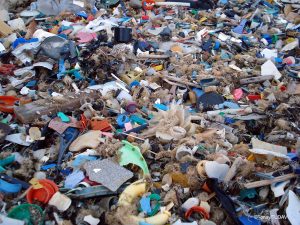
So how does this amount of plastic waste accumulate in the open seas?
It is estimated that 80% of the waste is carried to the sea from land. Nadja Ziebarth, an expert from the German Association for Environmental and Nature Protection, notes that waste is carried to the seas from open landfills in England and the Netherlands by wind and rivers. The environmental expert points out that this situation has dramatic consequences for marine life. Ziebarth says, “The waste carried to the seas has different consequences: One of them is injury to animals. Because they don't see the waste in the water and can get trapped between tangled pieces of waste, becoming severely injured and dying. They also mistake the torn plastic pieces for food and eat them, but they can't digest them. These substances remain in their stomachs, and in the worst case, they die of starvation with stomachs full of waste.”
Another consequence is that the toxins from plastic contaminate fish, entering the food chain and reaching humans who consume the fish.
Charging for plastic bags reduces consumption.
Thomas K. Doyle, representing the Centre for Coastal and Marine Research in Ireland at the conference, points out that in Ireland, plastic bags were charged for in 2000, and consumption decreased by 90% within two years. The annual per capita use of plastic bags is 18 in Ireland, 71 in Germany, 421 in Bulgaria, and 198 across the EU. In Kenya and Uganda, the use of thin plastic bags is banned, while thicker bags are sold at a very high price. In East African countries like Rwanda and Tanzania, these bags have not been used for about seven years. Similarly, in Bangladesh and Bhutan, plastic bags are hardly used at all.
Kim Detloff from the German Nature Conservation Association (NABU) emphasized the need to reduce plastic consumption, stating, “This starts primarily at the product design stage. That is, instead of single-use products, we should use recyclable and repairable products. Reducing packaging materials is the most important thing. We must focus on recycling, an efficient collection system, and the waste industry.”
Please click here to open the presentation given by TÜDAV at the conference.
For other presentations given at the conference, please click here.
International Conference on Preventing and Managing Marine Debris in European Seas,
10-12 April 2013, Berlin, Germany
To address the serious problem of marine litter in European seas and to ensure its proper management, an international conference, The International Conference on Prevention and Management of Marine Litter in European Seas, was held in Berlin, Germany, from April 10-12, 2013.
The conference was attended by participants from many countries around the world.
Organized by the German Federal Environment Agency (UBA) on behalf of the Federal Ministry of the Environment and the European Commission's Directorate-General for Environment, the conference was attended by approximately 210 people from countries such as Turkey, Germany, the USA, Brazil, the Netherlands, Denmark, Israel, Egypt, the UK, Italy, Portugal, France, Spain, Slovenia, Bulgaria, Greece, Romania, Norway, Canada, Poland, Belgium, Croatia, Estonia, Finland, Sweden, Switzerland, Mexico, Argentina, and Ireland. The participants included representatives from local governments, plastics manufacturers, recycling industry representatives, packaging industry representatives, retailers, shipbuilders, ferry and cruise ship officials, fishermen, port authorities, consumer organizations, environmental NGOs, academics, research institutes, and private sector associations.
The conference addressed: The discussions covered topics such as the regional and global dimensions of the marine litter problem and microplastic pollution, the European Union's regional and national targets, measures to combat marine litter, best practices for preventing and managing marine litter, new initiatives to prevent litter production, and action plans to be followed for four regions (Black Sea, Mediterranean Sea, Baltic Sea, Northeast Atlantic).
At the conference, TÜDAV presented Beşiktaş Municipality's 'Sea Surface Cleaning' project.
The Turkish Marine Research Foundation (TÜDAV) participated in the conference from Türkiye with a presentation titled "Beşiktaş Municipality's Sea Surface Cleaning Project." This project is among the best practices selected to reduce marine litter in European seas within the scope of the MARLISCO Project, in which TÜDAV is a partner.
The Marlisco Project was also presented at the conference.
At the conference, participants highlighted three fundamental principles: the precautionary principle, the polluter pays principle, and the prevention of source contamination, emphasizing that these principles should guide the prevention and management of marine litter.
Decisions made at the conference included: the inclusion of marine litter and plastic waste as a problem in the Marine Strategy Framework Directive; the development of integrated waste management infrastructure supporting waste prevention, collection, recycling, and energy recovery; ensuring sustainable consumption and production, including high-quality recycling and sustainable packaging; providing economic support for environmentally sound fishing and maritime transport practices; developing a marine litter inventory; developing regional action plans; supporting initiatives to reduce marine litter; and providing financial incentives for environmentally friendly cleanup activities.
Plastic pollution is growing.
It is estimated that between 100 and 150 million tons of plastic waste float in oceans and seas, with an additional 6.5 million tons added each year. According to the UN Environment Programme, there are an average of 13,000 pieces of plastic per square kilometer in the open sea. Currents distribute this waste to every corner of the world. At the conference, the German Association for Environmental and Nature Protection (BUND) presented a manifesto signed by European environmental organizations to the Federal Ministry of the Environment. The declaration, titled "Seas and Plastics," demands that 50% of the waste in European seas be cleaned up by 2020. However, cleaning up small plastic particles, especially those in plastic bags and exfoliating products, poses a major problem. Because these particles are so small, they cannot be filtered out by wastewater treatment systems.
So how does this amount of plastic waste accumulate in the open seas?
It is estimated that 80% of the waste is carried to the sea from land. Nadja Ziebarth, an expert from the German Association for Environmental and Nature Protection, notes that waste is carried to the seas from open landfills in England and the Netherlands by wind and rivers. The environmental expert points out that this situation has dramatic consequences for marine life. Ziebarth says, “The waste carried to the seas has different consequences: One of them is injury to animals. Because they don't see the waste in the water and can get trapped between tangled pieces of waste, becoming severely injured and dying. They also mistake the torn plastic pieces for food and eat them, but they can't digest them. These substances remain in their stomachs, and in the worst case, they die of starvation with stomachs full of waste.”
Another consequence is that the toxins from plastic contaminate fish, entering the food chain and reaching humans who consume the fish.
Charging for plastic bags reduces consumption.
Thomas K. Doyle, representing the Centre for Coastal and Marine Research in Ireland at the conference, points out that in Ireland, plastic bags were charged for in 2000, and consumption decreased by 90% within two years. The annual per capita use of plastic bags is 18 in Ireland, 71 in Germany, 421 in Bulgaria, and 198 across the EU. In Kenya and Uganda, the use of thin plastic bags is banned, while thicker bags are sold at a very high price. In East African countries like Rwanda and Tanzania, these bags have not been used for about seven years. Similarly, in Bangladesh and Bhutan, plastic bags are hardly used at all.
Kim Detloff from the German Nature Conservation Association (NABU) emphasized the need to reduce plastic consumption, stating, “This starts primarily at the product design stage. That is, instead of single-use products, we should use recyclable and repairable products. Reducing packaging materials is the most important thing. We must focus on recycling, an efficient collection system, and the waste industry.”
Please click here to open the presentation given by TÜDAV at the conference.
For other presentations given at the conference, please click here.