Wait for us, Antarctica!
Wait for us, Antarctica...
Prof. Dr. Bayram ÖZTÜRK,
Faculty Member at Istanbul University, President of TÜDAV (Turkish Foundation for Research and Development).
We've been on the road for months,
perhaps centuries have passed over us.
Where is Antarctica?
Where are the snow-white-bellied penguins?
Where is the land?
(From Oktay Sönmez's poem, "I Will Take You to Antarctica")
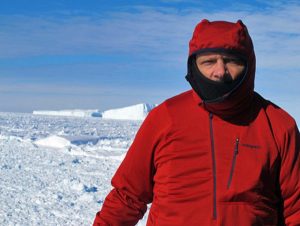
Recently, the South Pole (Antarctica) and the North Pole (Arctic) have become more widely discussed and attract more attention in Turkish public opinion. This is because the melting of glaciers and climate change, along with the resulting changes in ocean currents, the sustainability of marine resources, and marine protected areas, are all topics being debated in our public sphere.
In 2014, when I was invited as a visiting researcher to the 56th expedition of the Japan Polar Research Institute, I thought it would be good to understand what we could do. Because the previous year, a group of scientists and I had written and published a study called "Turkish Antarctic Scientific Research Roadmap." The research expedition I'm participating in is planned to start from Fremantle, Australia, and cover the Southern Ocean coast, including Antarctica, in four months. During this time, I'm staying at the Japanese Syowa research base, participating in marine studies and gaining experience in the logistics and planning required for the research. I also have the opportunity to see and examine the surrounding coastlines. I'm only in the first month of the four-month expedition.
I am continuing my work in the area between the Southern Ocean and Antarctica. The seas are very rough and strong, but there are three shifts of work, and we will complete the measurements and studies from beginning to end between Australia, the Southern Ocean, and Antarctica by March 30, 2015. The ship I am on is a military vessel belonging to the Japanese Navy; its name is Shirase, and it is 135 meters long. We have a total of 247 people, including 71 researchers. The ship also has 4 Bel-212 helicopters for use in the research. These helicopters also help the ship move more easily through the ice by examining the thinnest ice sheets. Our measurements include the variation of cold water currents in the Southern Ocean, which vary between 220m and 2500m, and whether this affects the entire current system on Earth and thus the global climate. We are also studying marine protected areas and pollution measurements.
WHERE IS ANTARCTICA?
When we look at a geography map, we actually see only one ocean on Earth. Because it is immediately apparent that 71% of the Earth's surface is covered with water and that we are on islands called continents. Antarctica is one of these, and for historical, scientific, cultural, and geographical reasons, it is separated from other continents. Historically, we can immediately name the Atlantic, Pacific, Indian, and Arctic Oceans, but the Southern Ocean is the newest ocean, despite all the debates. The line between Antarctica and 60 degrees south latitude is now the fifth ocean. This continent is governed according to the Antarctic Treaty. Accordingly, it covers the entire continent and all land and ice within 60 degrees south latitude. The treaty was first signed in 1959 by 12 countries. These signatory countries were: Argentina, Australia, Belgium, Chile, France, Japan, New Zealand, Norway, South Africa, the then Soviet Union (now the Russian Federation), Great Britain, and the United States. Today, the number of signatory countries has increased to 50. Our country is a party to the agreement with non-consultative status. That is, it is not in the consultative group of countries. However, it needs to strive to become one. According to the agreement, this is a demilitarized zone, or rather, the possession and use of weapons is prohibited. Territorial and rights claims of countries in this continent are suspended. The Madrid Protocol, an annex to the Antarctic Treaty, prohibits the extraction of oil or minerals except for scientific research, and this will continue until 2048. What happens after that will depend on new developments. This protocol may be extended or may not be renewed by some countries that wish to benefit from the continent's resources.
Perhaps 3,000 researchers and 30,000 tourists visit the continent in the summer. Tourists mostly arrive and depart by ship from the peninsula on the western side. However, there are certain conditions. According to the Environmental Protection Protocol of the Antarctic Treaty, human activities are limited. The entry and exit of plants and animals native to this continent are prohibited. In addition, approaching animals living in this region is limited to certain distances. For example, one can approach the much-talked-about penguins no closer than five meters. Nuclear testing and the storage and disposal of radioactive waste are also prohibited on the continent.
Antarctica is, so to speak, a continent of extremes. It truly deserves all the adjectives: coldest, driest, windiest, highest altitude. It is a continent with unique characteristics. First and foremost, it is a continent of science and peace. It is an unparalleled scientific paradise for scientists. For example, analyzing radio waves, conducting comparative human biology and medical research, studying climate change, and researching marine life are just a few examples. In short, it is a living earthly laboratory for scientists.
Antarctica is important not only for scientific research but also for commercial and geopolitical reasons. Therefore, some countries claim rights over the continent. Others, while quietly conducting research, will set aside their previous efforts and, when the time comes, will claim rights or at least be at the negotiating table. The continent also contains significant amounts of copper, gold, manganese, tin, and uranium, as well as varying quantities of gas and oil.
However, extracting and using these for commercial purposes is not currently possible under the existing agreement. I would also like to remind you that 90% of the world's freshwater is contained within the ice in Antarctica. Scientists, companies, and even governments (such as Saudi Arabia at one time) are developing many projects to transport these melting or non-melting icebergs to continents experiencing freshwater shortages. For example, would it be possible to load these icebergs onto ships and unload them in water-scarce areas of Africa for use? Or how would this be possible? Would transporting the icebergs by train be easier? Let's consider that even a tiny iceberg could meet the water needs of a medium-sized city for a long time.
The Southern Ocean has vast fishing grounds, which is why many nations have their eyes on it. But even for these stocks, sustainability is a key issue. For example, how will icefish and cod living in this region be affected by climate change? These species, which prefer cold water for spawning, are very sensitive to temperature changes. How will increased freshwater inflow and warming affect the fish species living here? These are questions that need to be answered. We can also ask these questions about krill, a cornerstone of the continental ecosystem and a type of shrimp. How does less ice affect the catch of this shrimp, or how do water temperature and atmospheric circulation affect the krill population? Is there a relationship between krill growth and diatom blooms? Is the change in phytoplankton composition under the influence of environmental factors? The scientific community will discuss these questions further, and we are having extensive discussions about them here in the Southern Ocean during our research.
Let's not forget that Antarctica is not just ice. This ocean is also very important for the global ocean cycle. When cold waters sink to the bottom, they enter the ocean cycle, which creates heat transfer for all oceans. In other words, it becomes a factor that controls our planet's long-term climate. Meanwhile, we know that the ice on the Amundsen Sea coast of Antarctica has begun to melt, and this will cause sea levels to rise. More importantly, we are also investigating claims that this melting will likely alter the cold water system in this region. In this case, changes in the global current system and consequently in climates may occur, which would be a phenomenon that would profoundly affect all nations of the world. This is one of our research topics.
CLAIMS
Although national claims to Antarctica are suspended under the Antarctic Treaty, seven countries still assert claims: Norway, Australia, Chile, Argentina, France, the United Kingdom, and New Zealand. Australia claims the largest proportion of the continent, asserting that Sir Douglas Mawson discovered it. However, China and India have established bases in areas claimed by Australia. Norway is the second largest claimant.
Unfortunately, the scientific knowledge of Turkish scientists regarding Antarctica and the Arctic is limited. There is a small group of researchers conducting research in this area, and most of them have participated in expeditions from either America, Norway, or Germany. It is estimated that the first known researcher was the late Atok Karaali. Due to his successful research here, the Antarctic Place Names Advisory Board (USACAN) named the small rocky outcrops on the eastern side of the mostly snow-covered Coulter Hills, located 5 nautical miles (9 km) east of Matikonis Peak in Marie Byrd Land, Antarctica, “Karaali Rocks (75°22'S; 137°55'W)” in honor of Atok Karaali, an ionospheric physicist working at Plato Station (1968). Presumably, the late Karaali was the first Turk to have a place named after him on this continent. The second was Professor [Name], who is currently the Rector of Koç University. Dr. Ümran Inan's name has also been given to an area in Antarctica in recognition of her achievements. These are sources of pride and clear motivation for us Turkish scientists. Meanwhile, I was pleased to learn last week that the Madrid Protocol has been sent to parliament for approval.
What we need to do is encourage more scientists, especially young scientists pursuing doctoral degrees, to come here to work out of interest. Yes, scholarships are available if anyone wants them. If you want to be part of an international system and produce knowledge, not just talk, then let's talk. There is much work to be done in and around the white continent.
Goodbye Turkey, goodbye my beautiful country. God willing, I will return at the end of March when spring comes to your mountains.
Prof. Dr. Bayram ÖZTÜRK,
Faculty Member at Istanbul University, President of TÜDAV (Turkish Foundation for Research and Development).
We've been on the road for months,
perhaps centuries have passed over us.
Where is Antarctica?
Where are the snow-white-bellied penguins?
Where is the land?
(From Oktay Sönmez's poem, "I Will Take You to Antarctica")
Recently, the South Pole (Antarctica) and the North Pole (Arctic) have become more widely discussed and attract more attention in Turkish public opinion. This is because the melting of glaciers and climate change, along with the resulting changes in ocean currents, the sustainability of marine resources, and marine protected areas, are all topics being debated in our public sphere.
In 2014, when I was invited as a visiting researcher to the 56th expedition of the Japan Polar Research Institute, I thought it would be good to understand what we could do. Because the previous year, a group of scientists and I had written and published a study called "Turkish Antarctic Scientific Research Roadmap." The research expedition I'm participating in is planned to start from Fremantle, Australia, and cover the Southern Ocean coast, including Antarctica, in four months. During this time, I'm staying at the Japanese Syowa research base, participating in marine studies and gaining experience in the logistics and planning required for the research. I also have the opportunity to see and examine the surrounding coastlines. I'm only in the first month of the four-month expedition.
I am continuing my work in the area between the Southern Ocean and Antarctica. The seas are very rough and strong, but there are three shifts of work, and we will complete the measurements and studies from beginning to end between Australia, the Southern Ocean, and Antarctica by March 30, 2015. The ship I am on is a military vessel belonging to the Japanese Navy; its name is Shirase, and it is 135 meters long. We have a total of 247 people, including 71 researchers. The ship also has 4 Bel-212 helicopters for use in the research. These helicopters also help the ship move more easily through the ice by examining the thinnest ice sheets. Our measurements include the variation of cold water currents in the Southern Ocean, which vary between 220m and 2500m, and whether this affects the entire current system on Earth and thus the global climate. We are also studying marine protected areas and pollution measurements.
WHERE IS ANTARCTICA?
When we look at a geography map, we actually see only one ocean on Earth. Because it is immediately apparent that 71% of the Earth's surface is covered with water and that we are on islands called continents. Antarctica is one of these, and for historical, scientific, cultural, and geographical reasons, it is separated from other continents. Historically, we can immediately name the Atlantic, Pacific, Indian, and Arctic Oceans, but the Southern Ocean is the newest ocean, despite all the debates. The line between Antarctica and 60 degrees south latitude is now the fifth ocean. This continent is governed according to the Antarctic Treaty. Accordingly, it covers the entire continent and all land and ice within 60 degrees south latitude. The treaty was first signed in 1959 by 12 countries. These signatory countries were: Argentina, Australia, Belgium, Chile, France, Japan, New Zealand, Norway, South Africa, the then Soviet Union (now the Russian Federation), Great Britain, and the United States. Today, the number of signatory countries has increased to 50. Our country is a party to the agreement with non-consultative status. That is, it is not in the consultative group of countries. However, it needs to strive to become one. According to the agreement, this is a demilitarized zone, or rather, the possession and use of weapons is prohibited. Territorial and rights claims of countries in this continent are suspended. The Madrid Protocol, an annex to the Antarctic Treaty, prohibits the extraction of oil or minerals except for scientific research, and this will continue until 2048. What happens after that will depend on new developments. This protocol may be extended or may not be renewed by some countries that wish to benefit from the continent's resources.
Perhaps 3,000 researchers and 30,000 tourists visit the continent in the summer. Tourists mostly arrive and depart by ship from the peninsula on the western side. However, there are certain conditions. According to the Environmental Protection Protocol of the Antarctic Treaty, human activities are limited. The entry and exit of plants and animals native to this continent are prohibited. In addition, approaching animals living in this region is limited to certain distances. For example, one can approach the much-talked-about penguins no closer than five meters. Nuclear testing and the storage and disposal of radioactive waste are also prohibited on the continent.
Antarctica is, so to speak, a continent of extremes. It truly deserves all the adjectives: coldest, driest, windiest, highest altitude. It is a continent with unique characteristics. First and foremost, it is a continent of science and peace. It is an unparalleled scientific paradise for scientists. For example, analyzing radio waves, conducting comparative human biology and medical research, studying climate change, and researching marine life are just a few examples. In short, it is a living earthly laboratory for scientists.
Antarctica is important not only for scientific research but also for commercial and geopolitical reasons. Therefore, some countries claim rights over the continent. Others, while quietly conducting research, will set aside their previous efforts and, when the time comes, will claim rights or at least be at the negotiating table. The continent also contains significant amounts of copper, gold, manganese, tin, and uranium, as well as varying quantities of gas and oil.
However, extracting and using these for commercial purposes is not currently possible under the existing agreement. I would also like to remind you that 90% of the world's freshwater is contained within the ice in Antarctica. Scientists, companies, and even governments (such as Saudi Arabia at one time) are developing many projects to transport these melting or non-melting icebergs to continents experiencing freshwater shortages. For example, would it be possible to load these icebergs onto ships and unload them in water-scarce areas of Africa for use? Or how would this be possible? Would transporting the icebergs by train be easier? Let's consider that even a tiny iceberg could meet the water needs of a medium-sized city for a long time.
The Southern Ocean has vast fishing grounds, which is why many nations have their eyes on it. But even for these stocks, sustainability is a key issue. For example, how will icefish and cod living in this region be affected by climate change? These species, which prefer cold water for spawning, are very sensitive to temperature changes. How will increased freshwater inflow and warming affect the fish species living here? These are questions that need to be answered. We can also ask these questions about krill, a cornerstone of the continental ecosystem and a type of shrimp. How does less ice affect the catch of this shrimp, or how do water temperature and atmospheric circulation affect the krill population? Is there a relationship between krill growth and diatom blooms? Is the change in phytoplankton composition under the influence of environmental factors? The scientific community will discuss these questions further, and we are having extensive discussions about them here in the Southern Ocean during our research.
Let's not forget that Antarctica is not just ice. This ocean is also very important for the global ocean cycle. When cold waters sink to the bottom, they enter the ocean cycle, which creates heat transfer for all oceans. In other words, it becomes a factor that controls our planet's long-term climate. Meanwhile, we know that the ice on the Amundsen Sea coast of Antarctica has begun to melt, and this will cause sea levels to rise. More importantly, we are also investigating claims that this melting will likely alter the cold water system in this region. In this case, changes in the global current system and consequently in climates may occur, which would be a phenomenon that would profoundly affect all nations of the world. This is one of our research topics.
CLAIMS
Although national claims to Antarctica are suspended under the Antarctic Treaty, seven countries still assert claims: Norway, Australia, Chile, Argentina, France, the United Kingdom, and New Zealand. Australia claims the largest proportion of the continent, asserting that Sir Douglas Mawson discovered it. However, China and India have established bases in areas claimed by Australia. Norway is the second largest claimant.
Unfortunately, the scientific knowledge of Turkish scientists regarding Antarctica and the Arctic is limited. There is a small group of researchers conducting research in this area, and most of them have participated in expeditions from either America, Norway, or Germany. It is estimated that the first known researcher was the late Atok Karaali. Due to his successful research here, the Antarctic Place Names Advisory Board (USACAN) named the small rocky outcrops on the eastern side of the mostly snow-covered Coulter Hills, located 5 nautical miles (9 km) east of Matikonis Peak in Marie Byrd Land, Antarctica, “Karaali Rocks (75°22'S; 137°55'W)” in honor of Atok Karaali, an ionospheric physicist working at Plato Station (1968). Presumably, the late Karaali was the first Turk to have a place named after him on this continent. The second was Professor [Name], who is currently the Rector of Koç University. Dr. Ümran Inan's name has also been given to an area in Antarctica in recognition of her achievements. These are sources of pride and clear motivation for us Turkish scientists. Meanwhile, I was pleased to learn last week that the Madrid Protocol has been sent to parliament for approval.
What we need to do is encourage more scientists, especially young scientists pursuing doctoral degrees, to come here to work out of interest. Yes, scholarships are available if anyone wants them. If you want to be part of an international system and produce knowledge, not just talk, then let's talk. There is much work to be done in and around the white continent.
Goodbye Turkey, goodbye my beautiful country. God willing, I will return at the end of March when spring comes to your mountains.