
National Forum on Marine Debris
National Forum on Marine Debris
WHAT SHOULD BE DONE ABOUT THE TRASH THROWN INTO THE SEA?
As a country, we are only now beginning to understand or discover the problem of protecting our seas. In the past, the issue of protecting our seas only came to the forefront when ships arriving at ports or passing through were fined heavily for dumping bilge water or garbage. However, much has changed in recent years. Many people have begun to address and question pollution issues. Because everyone is starting to be affected by developments around the world. Some Turkish-flagged ships have received very heavy fines for polluting the sea in many countries, especially in the UK. Regardless, we are experiencing a process of change.
This applies to everything, and it gives us hope. As in every democratic country, we are trying to understand, implement, and catch up with international standards, questioning why they are not implemented well in our country and who is not doing their job properly. In this article, I will talk about the damage that garbage thrown from ships causes to the seas, but port reception facilities should primarily take responsibility for this issue…
Because in many places, including the MARPOL 73-78 convention, we encounter waste dumped from ships, and problems in implementation lead to marine pollution. Therefore, as with other annexes of MARPOL, coastal states should not show weaknesses in implementing MARPOL.
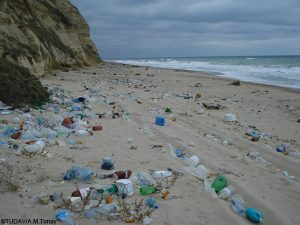
Generally speaking, maritime transport is always considered an environmentally friendly mode of transport. This is true, but like every sector, it has a damaging effect on the marine environment if precautions are not taken. Excluding oil spills, it has been determined that 5 million tons of solid waste are dumped into the seas and oceans from ships every day. Garbage is being recovered from thousands of meters deep in the oceans. Humanity has depleted not only space but also the seas. In our seas, it's even worse. In our underwater studies, we have consistently found garbage in the Finike Underwater Mountains and the Aegean Sea. However, according to the MARPOL Convention, the Black Sea, the Mediterranean, and the North Sea, where this research is being conducted, are defined as special areas. Despite this, calculations show that 70,000 m² of waste is dumped into the North Sea alone. Unfortunately, research on this issue is lacking in our country, but the solid waste we separate on deck during our voyages in the Marmara Sea – bottles, tires, plates, CDs, batteries, rope fragments, plastic bags, nylon, condoms, and many more materials – highlights the seriousness of the problem. During our research expeditions in 2001, we recorded that we collected an average of 4 kg of trash per mile of deck. In October 2007 and February-March 2008, we observed that the amount of trash at depths of 100 meters varied between 128 and 1320 pieces. Therefore, we must consider what we can do to stop the use of the Sea of ??Marmara, through which thousands of ships pass, as a virtual dumping ground. For example, research conducted off the coast of the Netherlands has revealed that 49% of the total trash is thrown from ships. Furthermore, 1800 pieces of plastic per kilometer have been calculated. A study in the UK seized 29,870 pieces of rope and 6381 pieces of fishing net. Ship-originated pollution also has harmful effects on marine life. Calculations show that every year, 1 million birds, 100,000 marine mammals, and sea turtles die worldwide due to plastics. These deaths are usually due to entanglement in nets and drowning. These animals have a very low chance of escaping from nets. It is also known that 77 species of marine mammals have accidentally choked on plastic or contracted infections as a result. Pieces of fishing nets have been found in the stomachs of dozens of bird species. Ship-derived waste not only affects marine life but also causes economic losses on coastlines and beaches. Because dirty and trash-filled beaches are not preferred by tourists, a 1998 study in England revealed interesting results: 322,751 pieces of trash were collected from just 167 km of coastline.
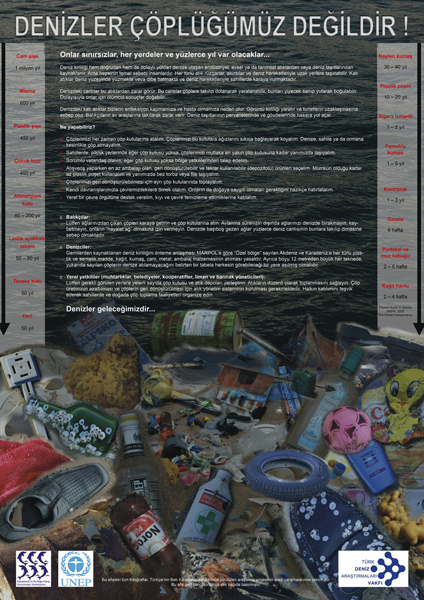
Cleaning a beach of this length in the North Sea is estimated to cost 52 million euros. Additionally, 200 ships have requested assistance from coast guard units due to ropes becoming entangled in their propellers. Calculations show that only 5-10% of ships dispose of their waste at port reception facilities. The rest simply throw it back into the sea! The time it takes for different types of waste to decompose and disappear in the sea varies, so what should be done about it?
Firstly, we can propose that all ships be required to dispose of their waste at port facilities, that ships be inspected before entering the next port, that receiving facilities be planned in ports, and that financial support be provided to developing countries for the construction of port reception facilities. However, to do and implement these, we need to train experts, direct the relevant authorities to cooperate, and invest in our ports. Of course, as a country, we also need to fulfill our obligations arising from the MARPOL Convention. Because if your port reception facilities are inadequate, neglected, abandoned, or have operational problems, you cannot provide sufficient and necessary services to both domestic and foreign ships, and you will have difficulty implementing the regulations you issue. In that case, our seas will remain as deep garbage pits. It is now known that waste materials remain in the sea for long periods. Let's change our consumption habits for the sake of waste that remains for hundreds of years. Let's use recyclable materials and prefer plastic materials less.
Yes, we still have a long way to go and much work to do. As the owners of some of the world's most beautiful coastlines and waters, we are obligated to work hard to prevent pollution from both ship and land-based sources.
WHAT SHOULD BE DONE ABOUT THE TRASH THROWN INTO THE SEA?
As a country, we are only now beginning to understand or discover the problem of protecting our seas. In the past, the issue of protecting our seas only came to the forefront when ships arriving at ports or passing through were fined heavily for dumping bilge water or garbage. However, much has changed in recent years. Many people have begun to address and question pollution issues. Because everyone is starting to be affected by developments around the world. Some Turkish-flagged ships have received very heavy fines for polluting the sea in many countries, especially in the UK. Regardless, we are experiencing a process of change.
This applies to everything, and it gives us hope. As in every democratic country, we are trying to understand, implement, and catch up with international standards, questioning why they are not implemented well in our country and who is not doing their job properly. In this article, I will talk about the damage that garbage thrown from ships causes to the seas, but port reception facilities should primarily take responsibility for this issue…
Because in many places, including the MARPOL 73-78 convention, we encounter waste dumped from ships, and problems in implementation lead to marine pollution. Therefore, as with other annexes of MARPOL, coastal states should not show weaknesses in implementing MARPOL.
Generally speaking, maritime transport is always considered an environmentally friendly mode of transport. This is true, but like every sector, it has a damaging effect on the marine environment if precautions are not taken. Excluding oil spills, it has been determined that 5 million tons of solid waste are dumped into the seas and oceans from ships every day. Garbage is being recovered from thousands of meters deep in the oceans. Humanity has depleted not only space but also the seas. In our seas, it's even worse. In our underwater studies, we have consistently found garbage in the Finike Underwater Mountains and the Aegean Sea. However, according to the MARPOL Convention, the Black Sea, the Mediterranean, and the North Sea, where this research is being conducted, are defined as special areas. Despite this, calculations show that 70,000 m² of waste is dumped into the North Sea alone. Unfortunately, research on this issue is lacking in our country, but the solid waste we separate on deck during our voyages in the Marmara Sea – bottles, tires, plates, CDs, batteries, rope fragments, plastic bags, nylon, condoms, and many more materials – highlights the seriousness of the problem. During our research expeditions in 2001, we recorded that we collected an average of 4 kg of trash per mile of deck. In October 2007 and February-March 2008, we observed that the amount of trash at depths of 100 meters varied between 128 and 1320 pieces. Therefore, we must consider what we can do to stop the use of the Sea of ??Marmara, through which thousands of ships pass, as a virtual dumping ground. For example, research conducted off the coast of the Netherlands has revealed that 49% of the total trash is thrown from ships. Furthermore, 1800 pieces of plastic per kilometer have been calculated. A study in the UK seized 29,870 pieces of rope and 6381 pieces of fishing net. Ship-originated pollution also has harmful effects on marine life. Calculations show that every year, 1 million birds, 100,000 marine mammals, and sea turtles die worldwide due to plastics. These deaths are usually due to entanglement in nets and drowning. These animals have a very low chance of escaping from nets. It is also known that 77 species of marine mammals have accidentally choked on plastic or contracted infections as a result. Pieces of fishing nets have been found in the stomachs of dozens of bird species. Ship-derived waste not only affects marine life but also causes economic losses on coastlines and beaches. Because dirty and trash-filled beaches are not preferred by tourists, a 1998 study in England revealed interesting results: 322,751 pieces of trash were collected from just 167 km of coastline.
Cleaning a beach of this length in the North Sea is estimated to cost 52 million euros. Additionally, 200 ships have requested assistance from coast guard units due to ropes becoming entangled in their propellers. Calculations show that only 5-10% of ships dispose of their waste at port reception facilities. The rest simply throw it back into the sea! The time it takes for different types of waste to decompose and disappear in the sea varies, so what should be done about it?
Firstly, we can propose that all ships be required to dispose of their waste at port facilities, that ships be inspected before entering the next port, that receiving facilities be planned in ports, and that financial support be provided to developing countries for the construction of port reception facilities. However, to do and implement these, we need to train experts, direct the relevant authorities to cooperate, and invest in our ports. Of course, as a country, we also need to fulfill our obligations arising from the MARPOL Convention. Because if your port reception facilities are inadequate, neglected, abandoned, or have operational problems, you cannot provide sufficient and necessary services to both domestic and foreign ships, and you will have difficulty implementing the regulations you issue. In that case, our seas will remain as deep garbage pits. It is now known that waste materials remain in the sea for long periods. Let's change our consumption habits for the sake of waste that remains for hundreds of years. Let's use recyclable materials and prefer plastic materials less.
Yes, we still have a long way to go and much work to do. As the owners of some of the world's most beautiful coastlines and waters, we are obligated to work hard to prevent pollution from both ship and land-based sources.