Proposals for Marine Protected Areas in the Black Sea
Proposals for Marine Protected Areas in the Black Sea
Five Areas in the Black Sea Proposed as Marine Protected Areas
Eight marine science experts, including Bayram Öztürk, Bülent Topaloğlu, Ahmet Kıdeyş, Levent Bat, Çetin Keskin, Murat Sezgin, Ayaka Amaha Öztürk, and Ahmet Yalçıner from Istanbul, Sinop, and Middle East Technical Universities, have proposed five marine protected areas for the Turkish coast of the Black Sea.
Within the framework of the COCONET (www.coconet.org) Project, supported by the European Union's 7th Framework Programme, it is recommended that these areas, identified for the purpose of protecting sustainable fisheries and biodiversity on Turkey's Black Sea coast, be declared as Marine Protected Areas by the Ministry of Environment and Urbanization as soon as possible.
As is known, Turkey's Black Sea coast is under serious threat. In particular, marine living resources are on the verge of depletion due to threats such as excessive and unregulated use of coastal areas, excessive and illegal fishing; pollution from ships and land, invasive species, and global climate change.
The establishment of marine protected areas is of great importance in the region for the continuation of marine biodiversity and sustainable fisheries. Currently, there are no marine protected areas established along Turkey's Black Sea coast. Considering the criteria set forth in the Protocol on the Conservation of Biological Diversity, to which Turkey is a signatory, such as the presence of endangered and threatened species, the existence of rare and sensitive habitats necessary for the survival of these species, and areas where degradation in biological production can be slowly restored, five ecologically significant points in the region are proposed as Marine Protected Areas.
In addition to being exposed to many human-induced threats mentioned above, the Black Sea is a closed system with the world's largest anoxic (oxygen-free) volume, and its only connection to the Atlantic Ocean via the Mediterranean is through the Bosphorus Strait. This unique situation makes the Black Sea ecosystem even more fragile. Furthermore, due to international maritime traffic, the Black Sea is also exposed to ship-origin pollution from accidents, oil spills, and bilge water. Some commercially important species, such as tuna, turbot, mackerel, horse mackerel, and sturgeon, have seen their populations decline due to overfishing and the spread of invasive species. Marine protected areas are considered a crucial solution for the Black Sea ecosystem to recover from these severe threats.
There are many Marine Protected Areas in the Black Sea, designated by countries other than Turkey that border the sea. According to the United Nations Environment Programme, World Conservation and Monitoring Centre, 2008 World Protected Areas database records, there are 125 protected areas along the Black Sea coast. Zernov’s Phyllophora Protected Area, located on the northern shelf of the Black Sea in Ukraine, is the most recently designated scientific protected area. According to current data, there are 1.1 million hectares of coastal protected areas designated by Black Sea coastal countries along the Black Sea coast. The Danube Delta Biosphere Reserve in Romania alone accounts for approximately half of this amount. In addition, Mai Vama Veche protected area (Romania), Zernov Phyllophora Botanical Reserve (Zakaznik), Chernomorskiy Biosphere Reserve (Ukraine), and Bolshoi Utrish Protected Area (Russia) are important areas.
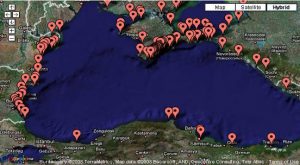
According to BSC and UNEP-WCMC data, Ramsar Status Wetlands and Marine Protected Areas located on the Black Sea Coast (all areas shown on the Turkish coast are Ramsar sites)
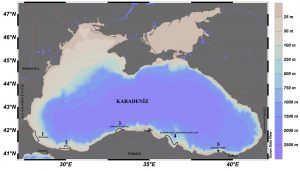
Proposed Marine Protected Areas (MPAs) for Turkey's Black Sea Coast
Region 1: İğneada
It is believed that developing a regional strategy for the protection of the Black Sea is only possible by creating transboundary protected areas, which do not currently exist. The establishment of this transboundary protected area is planned to take place on the Bulgaria-Turkey border, encompassing İğneada and Rezova. The region, including its sandy area, is an important habitat and a biodiversity-rich area.
2. Region: Şile - Kefken
The proposed protected area for the western Black Sea coast is the region between Şile and Kefken. This region, also influenced by the Bosphorus, acts as a springboard, providing vital links in the marine ecosystem for many migratory species between the Black Sea and the Mediterranean, serving as feeding, growing, spawning, and wintering grounds. Şile is an important area with small-scale fishing.
3. Region: Cide–Doğanyurt
Individuals of the Mediterranean Monk Seal, of which only 15 are reported to remain on the Turkish coast, have been observed. Therefore, the area between Cide and Doğanyurt is proposed as the 3rd Marine Protected Area on the Black Sea coast.
4. Region: Kızılırmak and Yeşilırmak Rivers and Deltas
These two rivers form important wetland and delta ecosystems on the Turkish Black Sea coast. The Kızılırmak Delta, in particular, is home to sturgeon.
It is a spawning and breeding ground. This region, which harbors important habitats, was declared a Ramsar site in 1998. The Kızılırmak and Yeşilırmak delta areas contain and nourish marine, coastal freshwater, and terrestrial ecosystems and have been proposed as Marine Protected Areas.
5. Region: Whiting Reef - Trabzon
The Whiting Reef is a natural reef located off the coast of Trabzon. This area, which is home to economically valuable fish species such as turbot, whiting, and red mullet, is approximately 30 miles off the coast of Trabzon, 80-90 m deep, and approximately 2 km wide. For this reason, it has been proposed as a protected area.
Proposed Marine Protected Areas for Turkey's Black Sea Coast
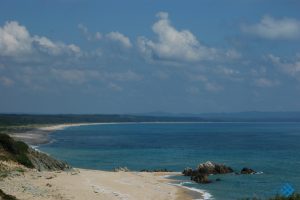
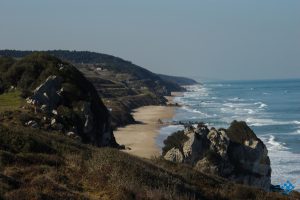
İğneada Coast is known for its wide and unspoiled sandy beaches.
Source:
Öztürk, B., Topaloğlu, B., Kıdeyş, A., Bat, L., Keskin, Ç., Sezgin, M., Öztürk, A.A.,
Yalciner, A.C., 2013. A proposal for new marine protected areas along the Turkish Black Sea Coast. J. Black Sea/Mediterranean Environment. Vol. 19, No. 3: 365-379